Points of Interest
-
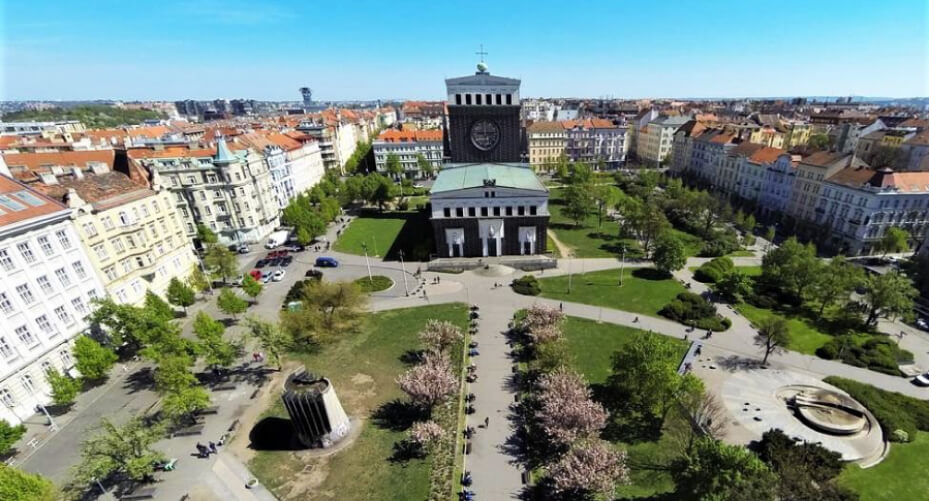
In the beginning, there was Viničné Hory. This was a separate municipality, independent of Prague, in the place where Vinohrady and Žižkov were later established. However, it was not a traditional municipality but rather a collection of farmsteads scattered across a large area. They had their own “wine office,” located at what is now Ke Karlovu 7. The acting master vintner oversaw the vineyards, the quality of the wine, and disputes among winemakers. Eventually, the borough split into two municipalities –Vinohrady and Žižkov – which in the second half of the 19th century saw brisk development. While wealthier citizens moved into Vinohrady and its airy, spacious apartments, the poorer population and working class settled in the deck-access tenements of Žižkov.
-
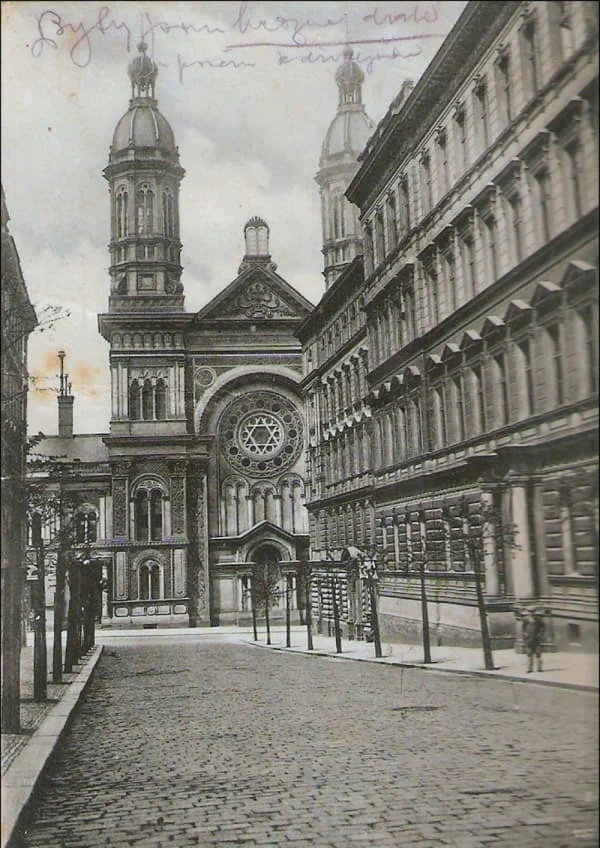
Until the end of World War II, Vinohrady had its own synagogue called Templ. It was built in 1896 but was damaged during the bombing of Prague. The Germans prevented firefighting efforts, and the communist regime blocked repairs, so the synagogue had to be demolished by bulldozers in 1951. It was located on Sázavská Street (where today a school is found). This was the largest synagogue in Prague, with a capacity of up to 2,000 people.
-
Today’s Vinohrady district lies primarily in Prague 2, but also in Prague 3 and 10. A small portion lies in Prague 4 and also in Prague 1 – represented by the State Opera building. Another curiosity is the Main Railway Station: the old Art Nouveau building designed by architect Fanta lies in Vinohrady, while the new departure hall is in New Town.
Gallery